World Analysis Cannot Be Conducted with a Casino Mentality: The Limits of Game Theory and the Liquidation of the Marxist Method
History is not an intellectual game played in a laboratory by armchair theorists or gambling politicians. It is a historical and revolutionary process flowing under the direction of objective laws.


Introduction: The Allure of Fashion and Intellectual Regression
A fashionable wind is blowing through contemporary international relations analyses, geopolitical crisis topics, the maneuvers of imperialist centers, and global war forecasts. From television screens to digital platforms, from academic journals to popular Substack pages, everywhere is occupied by a specific conceptual toolbox: “Zero-sum game,” “prisoner’s dilemma,” “win-win strategies,” “bluffing mechanisms,” and “equilibrium points.” These concepts are circulated as if they were universal keys unlocking all the locks of world politics.
The most grave and thought-provoking aspect of this matter is that certain writers and analysts, who define themselves as “on the left,” “socialist,” or directly “Marxist,” are also caught up in this wind, attempting to analyze the world through these liberal theoretical templates. To cast aside the holistic, historical, class-based, and political-economic method of Marxism and to lecture with these sterile concepts of bourgeois academia is not merely a sign of theoretical shallowness; it is also a serious problem of intellectual arrogance.
Those who forget the cornerstones of historical materialism, imperialism theories, and the laws of capital accumulation are attempting to explain the world of the rulers through the language of the rulers. Yet, neither is world history a casino whose rules are predetermined, nor can global politics and the fate of peoples be explained by reducing them to the selfish calculations of two prisoners in a prison cell. Beyond a methodological collapse, this situation presents a thoroughly frustrating spectacle at the intellectual level. This article has been penned to expose the ideological origins, methodological limits of Game Theory, and the illusion of shallow rationalism that leads to the liquidation of the Marxist method.
1. Who Built the Table? The Cold War Origins and Ideological Function of Game Theory
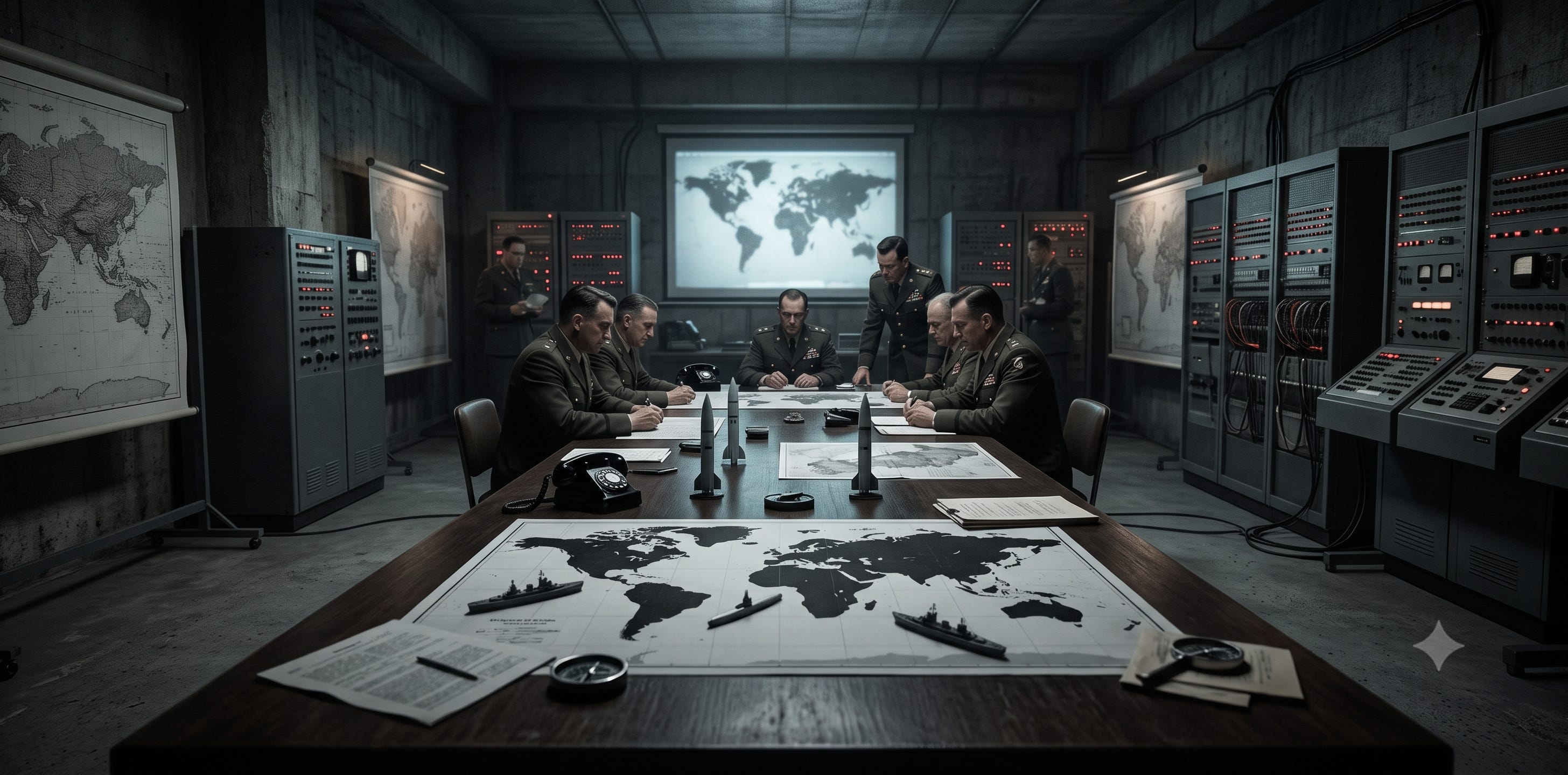
Game Theory is not an ideologically untainted, pure mathematical miracle that descended from the heavens. Like every theory, it was shaped as the product of a specific historical cross-section, specific class needs, and dominant political orientations. Although the theoretical foundations of the theory rest upon John von Neumann and Oskar Morgenstern’s 1944 book Theory of Games and Economic Behavior, the transformation of this approach into a tool for world analysis took place during the darkest period of the Cold War.
Following the Second World War, Pentagon-backed think tanks such as the RAND Corporation—established to consolidate the global hegemony of US imperialism and to develop military-strategic maneuvers against the Soviet Union—became the actual incubation centers for Game Theory. Models of “equilibrium“ developed by mathematicians like John Nash were militarized by the American state apparatus to plan the Mutually Assured Destruction (MAD) doctrine, regional interventions, and invasion strategies.
The ideological function here is perfectly clear: to cover up global conflicts, colonial aggression, the profit lust of monopolies, and the oppression of peoples; and to present all these bloody and structural processes as a sterile series of “rational moves“ or an “intellectual game“ played in a laboratory environment.
Game Theory is a sophisticated way of rationalizing and naturalizing the interests of the capitalist system. Leaving imperialism and class struggle outside the scope of analysis, this model presupposes the world as a static playing field whose rules, rewards, and punishments have been predetermined by the rulers. The task falling upon an analyst is not to question the rules of this frozen table, but to calculate how the players can make more “profitable” moves at the table. Therefore, the theory is inherently status-quoist and begins its work by taking existing relations of domination as a given.

2. The Limits of Casino Uncertainty and the Prison Cell Mentality
The two most popular metaphors of the theory clearly reveal the philosophical blindness in reading the world: the casino table and the prison cell.
The concept of a “zero-sum game“ is borrowed directly from a casino table. At the table, for one side to win, the other must necessarily lose; the total gain and loss equal zero. This logic is frequently utilized in international relations to explain the partition of territories or absolute struggles for hegemony.
However, the real world and historical processes do not operate like a casino table. In a casino, the dice, cards, and rules are artificial, determined by an external authority (the house), and are fixed. In global politics, on the other hand, the rules themselves are the primary subject of struggle.
Today, the relations between China-Russia and the rest of the world, and the confrontations experienced with the Western bloc, are not merely a strategy based on “making better moves” at the financial and military table established by the West (IMF, World Bank, NATO hegemony). On the contrary, these moves contain an objective orientation aimed at fundamentally changing, shaking, or dismantling the very rules of that table—namely, dollar hegemony, the unipolar world order, and the structure of international institutions. A static casino model cannot grasp this dynamic and historical will directed toward overturning or re-establishing the table.
The second major impasse manifests itself in the model of the “Prisoner’s Dilemma.” This scenario—which describes two prisoners completely isolated from the outside world, unable to communicate with each other, betraying one another out of a selfish impulse for survival, and consequently both ending up worse off—is constantly invoked to explain arms races or the dissolution of alliances.
This is, in the truest sense, a “prison cell” mentality.
This model completely abstracts actors from their historical pasts, social structures, internal contradictions, and ideological identities; it reduces them to two transparent objects in a laboratory.
Yet, in the real world, states, blocs, or classes are not isolated prisoners without a past. When analyzing the relations between global powers, historical memory, reflexes of national sovereignty, production capacities, social dynamics, and class alliances must be taken into account.
When this depth is ignored, “war simulations” and “move predictions” that appear flawless on paper shatter upon striking reality. The reason why Western analysts’ numerous predictions based on Game Theory models failed in the Ukraine, Taiwan, or Iran crises is precisely because they imagined the world to consist solely of that dark prison cell.

3. The Illusion of “Free Will” and the Determinacy of Objective Processes
The most fundamental philosophical error of Game Theory and its underlying bourgeois methodology (methodological individualism) is to treat human will, choices, and definitions of “rationality“ as absolute, independent variables that have, as it were, descended from the heavens. According to this approach, global politics is a chessboard managed by leaders or decision-makers through their pure intellect and personal choices. This subjective viewpoint, which ignores objective processes, production relations, and historical laws, is the greatest obstacle to producing a scientific analysis of the world.
Marxist methodology, however, establishes this relationship in the exact opposite direction: What determines people’s choices, wills, and decisions are the objective conditions, relations of production, and socio-class positions in which they find themselves.
Let us recall Karl Marx’s timeless formulation in The Eighteenth Brumaire of Louis Bonaparte:
“Men make their own history, but they do not make it as they please; they do not make it under self-selected circumstances, but under circumstances existing already, given and transmitted from the past.”
What writes the “list of options” placed before a head of state, a military clique, or a massive monopoly is not their personal genius or rational choice, but the relentless imposition of objective processes. Actors are born onto a historical stage they did not choose, and they can act only within the material boundaries of that stage.
Even the “rationality” consecrated by Game Theory as a universal and immutable reason possesses, in fact, a class-based and objective character. For a capitalist to lower a worker’s wages, automate production, or move their factory to another country in order to protect profit rates is not a “brilliant strategic choice”; it is the sole mode of existence and survival objectively imposed upon them by the relentless laws of capital accumulation and capitalist competition. The capitalist knows that if they do not do this, they will cease to exist. Therefore, rationality is the necessary reflection of the objective logic of the system within the consciousness of the actor.
This is the turning point that separates world analyses from the casino mentality: in history and politics, the dice do not roll randomly; material, economic, and objective laws are in effect that determine the muscle structure of the hands throwing those dice, the center of gravity of the dice, and the social ground upon which they will fall. What gives rise to the choice, and what draws its boundaries, is the objective process itself.

4. Intellectual Arrogance: The Dilution of Marxism via “Rational Choice”
It is understandable that these liberal and positivist theories are held in high esteem within bourgeois academia; they act as the ideological guardians of their own system. What is truly pathetic, however, is that those who call themselves Marxists adopt these concepts and speak with grandiose words. This situation exposes the theoretical shallowness and arrogance of a generation that has never grasped the deep methodological heritage of Marxism and has been nourished by the conceptual fashions of capitalism.
In fact, the theoretical roots of this decay are not new. From the 1980s onward, under the influence of post-colonial and neoliberal winds, particularly in Western academia, “Analytical Marxism“ (or by its popular name, Rational Choice Marxism) prepared the ground for this liquidation. Figures like Jon Elster and John Roemer claimed that Marxism was “outdated” and attempted to “modernize” and “scientificize” it through Game Theory, mathematical modeling, and methodological individualism.
What they did served no purpose other than completely emptying Marxism of its revolutionary, historical, and holistic essence. They liquidated class analysis, the labor theory of value, and the concept of imperialism, replacing them with the selfish, utilitarian, and atomized individual model of bourgeois economics.
Today, those who whip up “grand world analyses” on internet platforms and Substack pages, explaining everything through Game Theory terms with a shallow understanding and without having acquired a solid theoretical formation, are reducing Marxism to a simple logic game. Those who write articles with the template of “what move will actor A make against actor B in a zero-sum game,” without examining historical laws and without analyzing the structural crises of the capitalist system, are nurturing a methodological blindness.
This methodological decay also paralyzes left-wing analyses politically. A leftism that reads the world through the table set by the rulers cannot see the social movements, the anger of oppressed peoples, and the revolutionary potentials maturing within the heart of objective contradictions. Failing to see this, they transform into passive, cynical “match commentators” who watch global conflicts as if from the bleachers, interpreting the traffic of moves made by imperialist centers. One cannot wage a war against the rulers using the conceptual weapons of the rulers.

5. Global Contradictions and War Forecasts: How Real Analysis Is Conducted
Well then, when this casino mentality —which policy-makers also keep on their lips— is rejected, how should the contemporary global tensions between the US-Western bloc and China-Russia and the rest of the world, imperialist aggressions, crisis areas such as Ukraine, Taiwan, and Iran, and potential war forecasts be analyzed?
A correct and scientific analysis does not take its departure point from the instantaneous psychology of the actors, their bluffing abilities, or their “blinking” durations.
A Marxist political-economic analysis begins with the following objective steps:
•The Crisis of Capital Accumulation Regimes: The primary engine behind imperialist aggression and confrontations is not the gambling strategies of leaders, but the structural crisis of the capitalist system. The tendency of the rate of profit to fall, the crisis of overaccumulation, and the blockage of financialization force imperialist centers to adopt more aggressive policies in order to protect their hegemony.
•The Struggle for Markets, Energy, and Raw Materials: Conflict zones are not an abstract “power game”; they are concretely a struggle for the control of energy routes, maritime trade routes, critical minerals, and new market areas. This struggle objectively brings imperialist states face to face.
•The Changing International Division of Labor: China’s transition from being merely a paradise of cheap labor to a global power in the fields of high technology and industrial production has shaken the international division of labor. The US policy of containment is nothing other than an effort to halt this objective economic shift by relying upon military and political force. This is not a “choice,” but a structural reflex of the imperialist system.
Consequently, when analyzing the war in Ukraine or a tension over Taiwan and Iran, conducting an analysis with Game Theory’s “chicken game“ model is utter ignorance. There are no cars confronting one another there, nor are there crazy drivers steering those cars; what confront one another there are massive objective blocs directed by capital accumulation regimes, historical geopolitical ruptures, and class interests. War forecasts can be made by examining these material foundations, not through the probability calculations of game theorists.
Conclusion: Defending the Destruction of the Table, Not the Moves Upon It
The clarity and power of the Marxist method stem from its refusal to read the world through the conceptual toolbox of the rulers, their definitions of rationality, and within the boundaries of the table they have established. Casino uncertainty and the prison cell mentality represent the narrowing of the horizon of bourgeois thought, which turns round and round within the boundaries of the existing status quo, unable to even imagine stepping outside those boundaries.
The duty of those who call themselves Marxists is not to gaze with admiration at the traffic of moves on the rulers’ table and engage in bleacher commentary. A correct and revolutionary analysis must reveal the class contradictions, the mechanisms of imperialist exploitation, and the inevitable points of blockage of capital accumulation regimes that bring that table into existence, alongside the agency of peoples within these objective processes.
The issue is not which move which actor will make at that table; the issue is to expose upon what class exploitation that table is built and to demonstrate how that table will be fundamentally destroyed. History is not an intellectual game played in a laboratory by armchair theorists or gambling politicians; it is a living, historical, and revolutionary process flowing under the direction of objective laws, through the relentless will of the class struggle. Against shallow arrogance, the only ground that must be defended is the clarity of this scientific materialism.【●】